
For a normal tape-and-solvent regrip, use a purpose-made grip solution that suits your tape and grips. If you want to use water, you need a tape system specifically designed for it. A bottle from the shed isn’t automatically a substitute just because someone online got a grip on with it.
The useful question is what works with the materials you’ve actually bought. Get that sorted before you cut the old grips off.
Start with the tape, not the bottle
Check the tape packaging or supplier’s instructions. Does it say solvent-activated or water-activated? Those are different fitting systems. If you’ve got an unmarked roll, ask the supplier rather than guessing.
- Solvent-activated grip tape: choose a grip-fitting solution approved for that tape and your grip material.
- Water-activated tape: follow that tape’s water-fitting instructions, including the drying time.
- Unknown tape: identify it before starting. “Double-sided” alone doesn’t tell you which liquid to use.
The GolfWorks sells a purpose-made solvent for solvent-activated grip tape. Its separate water-soluble tape instructions describe a warm-water installation method for that specific tape. They aren’t instructions for using water on any roll you happen to have.
Can you use water or washing-up liquid?
With the right water-activated tape, yes: use the manufacturer’s method. With ordinary solvent-activated tape, don’t assume water is an approved replacement.
The GolfWorks’ water-soluble tape instructions allow a small amount of dish soap in the water for that system. That detail often gets detached from the tape it applies to. Adding washing-up liquid doesn’t turn an unidentified roll into water-activated tape.
Also, a formulated grip solution and plain tap water are different products. Follow the bottle’s instructions; don’t dilute it unless the manufacturer tells you to.
What about mineral turps, white spirit or lighter fluid?
You’ll see household solvents suggested in regripping discussions. We wouldn’t choose one from a generic shopping list without checking the exact product against the grip and tape instructions.
There’s a practical reason for being fussy. The GolfWorks explains that compatibility problems between older mineral-spirits-based formulas and some newer grip materials led it to develop a revised grip solvent. “It worked on my old grips” doesn’t settle whether it suits yours.
Product names and formulations also need checking on the actual label. Don’t assume an overseas recommendation identifies the same bottle sold in Australia. Check the safety data sheet and handling instructions too. If you can’t confirm compatibility, buy a suitable grip solution or have the clubs fitted.
A purpose-made option: Brampton HF-100
Brampton HF-100 grip solution is one option to consider for a DIY regrip. Brampton describes HF-100 as non-flammable and odourless. Those are claims for this product, not every liquid sold as grip solvent.
Its application instructions matter as much as the choice of bottle. Brampton says to shake HF-100 before use, spray the tape thoroughly and apply it inside the grip as directed. It also warns that using too much can extend setup time. See Brampton’s HF-100 fitting FAQs for the current method.
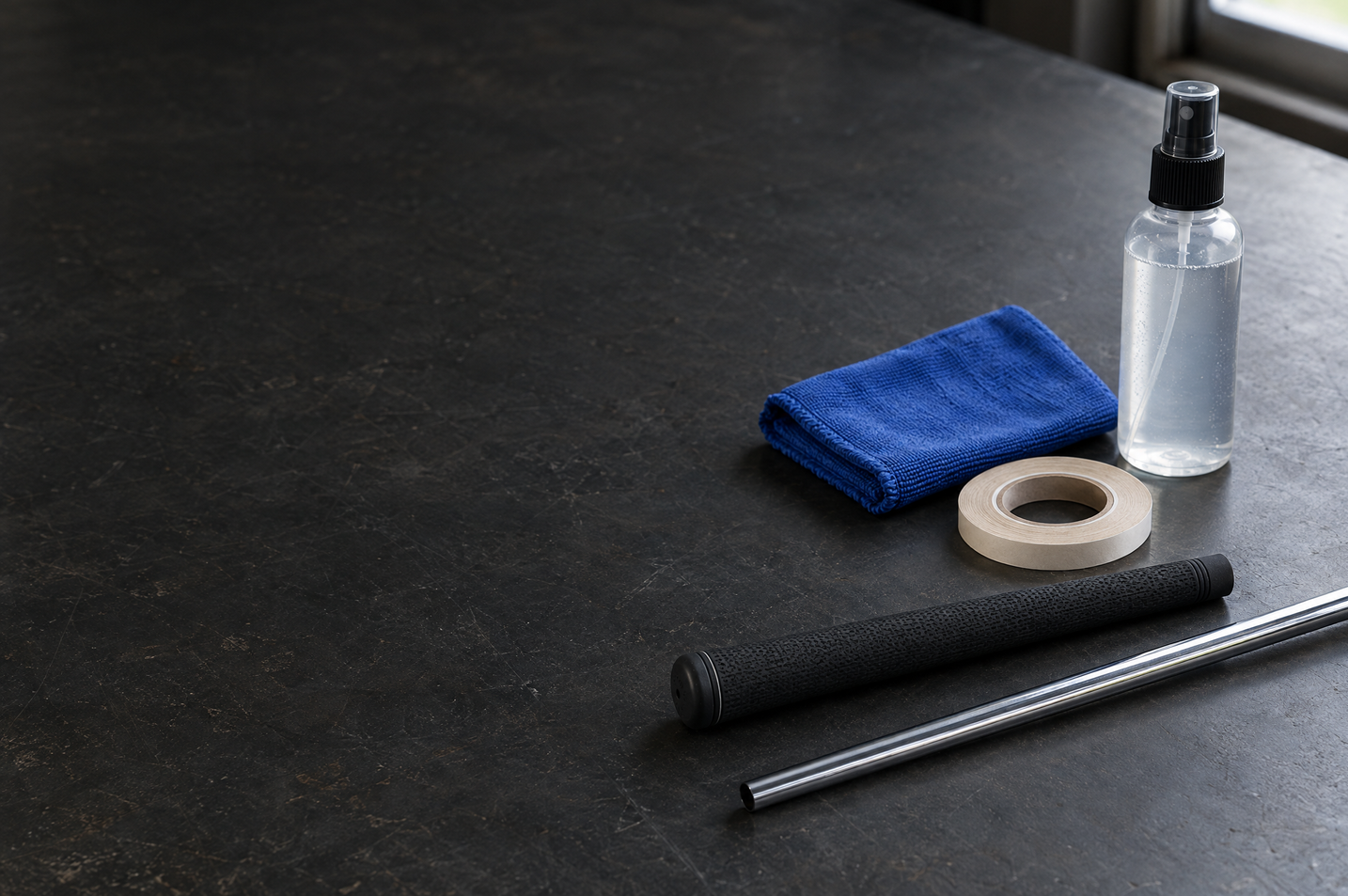
The unbranded cover image is an illustration of a regripping workspace; it doesn’t show HF-100 packaging.
Check these before starting the set
- Know the grip and tape. Keep their packaging handy and check for any material-specific fitting instructions.
- Have the right solution ready. Check the bottle’s application method and handling directions before removing anything.
- Prepare the shaft properly. Our old grip tape guide covers what to remove and what to check.
- Allow the specified drying time. Don’t borrow a drying-time claim from a different solvent or tape system. Our guide to playing after regripping explains the checks.
If you’ve run out halfway through a set, pause and get the correct supplies. A half-finished job is annoying. Doing it twice is worse.