
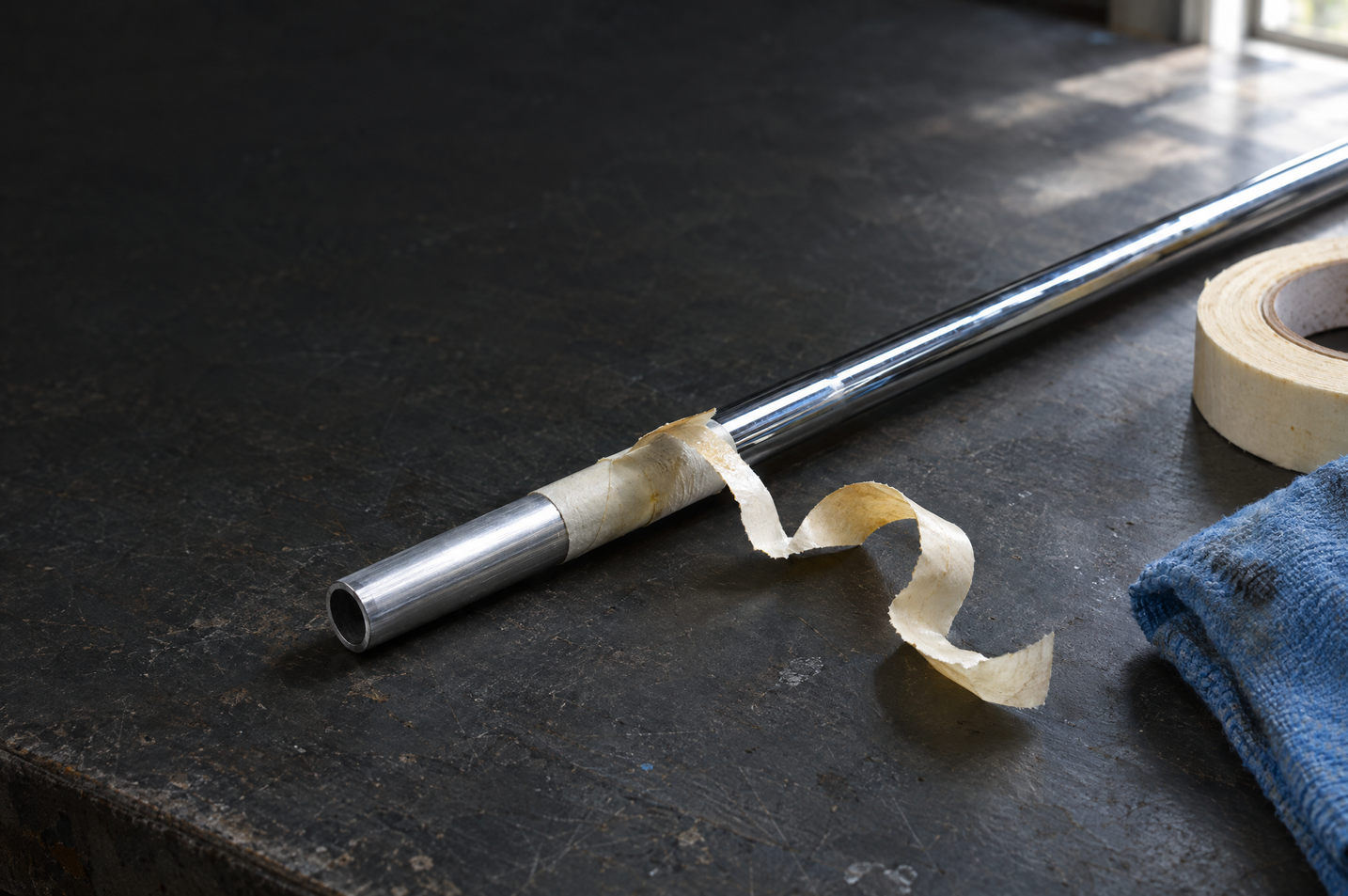
Usually, yes. For regripping with solution and double-sided tape, we recommend removing the old tape and starting with a clean shaft. Golf Pride’s installation guide gives the same starting point.
Brampton allows an exception: old tape that is completely intact and smooth can stay as a deliberate build-up layer. Torn, lifting or lumpy tape should come off.
Why start with a clean shaft?
You can see what you’re working with and choose exactly how many layers go under the new grip. You also avoid hiding loose tape beneath a fresh layer.
Remove the adhesive residue too. Brampton warns that oil and other slippery residue can stop fresh tape sticking properly.
When can old tape stay?
Brampton’s regripping FAQ says it must be fully intact and smooth after the old grip comes off. It then counts as part of the build-up beneath the new grip.
That extra thickness is part of the result. If you want to repeat your current grip size, adding another layer over the old one changes the build.
Follow the instructions for your chosen grip and installation materials. Starting fresh is the straightforward option when you don’t know what is already underneath.
How do you remove it?
Peel off the old tape. Use a purpose-made tape-removal tool for stubborn sections, taking care with the shaft surface, especially graphite.
Brampton recommends its Uneekscraper. Clear away the remaining adhesive using a method suitable for your shaft, then leave a clean, dry surface for the new tape.
Want a thicker grip? Build it deliberately
Use the required build-up layers beneath the final double-sided grip tape. Record what you used so you can repeat it on the other clubs.
Brampton build-up tape adds thickness. Brampton 591 double-sided grip tape is the final adhesive layer for a compatible solution-based installation. They do different jobs.
Can masking tape replace golf grip tape?
For a conventional tape-and-solution installation, masking tape can be an inner build-up layer. It does not replace the final double-sided grip tape. Brampton’s tape guidance makes that distinction: use masking tape underneath to add thickness, then grip tape as the outer layer.
That means “I used masking tape” is only half an explanation. Ask whether it was underneath the adhesive layer or part of a different installation method. A video using different grips or equipment is not automatically a recipe for the job on your bench.
Don’t substitute a roll from the shed just because it is double-sided. Check that the tape is intended for golf grip installation and that its instructions match your solution. If you cannot establish that, buy the specified materials before removing the old grips.
Check the tape and solution as a pair
Brampton says its grip tapes require solvent rather than plain water. A water-based grip solution is a formulated product, not permission to use the tap. Our grip solvent alternatives guide explains what to check.
With pre-cut strips, check the liners too. Brampton’s installation tutorial shows removing the first liner before applying the strip, then removing the outside liner. Leaving backing paper under the grip is an easy mistake to avoid.
Write down the build before doing the set
“Two wraps” is not much of a record if you cannot remember which tape you used or whether you counted the adhesive layer. Keep a short note:
- The grip model, size and core size.
- The build-up tape used and the number of layers.
- Whether those layers cover the full grip length or a chosen hand area.
- The final double-sided tape and compatible solution.
Fit one club first and judge the finished feel after the specified drying time. If it is what you wanted, you have a repeatable starting point for the rest. If it is not, you have one club to change instead of thirteen. Fairly easy maths.
If you’re changing thickness because neither standard nor midsize feels right, read our guide to being between grip sizes.
For the rest of the bench setup, see our regripping kit checklist before taking the old grips off.