
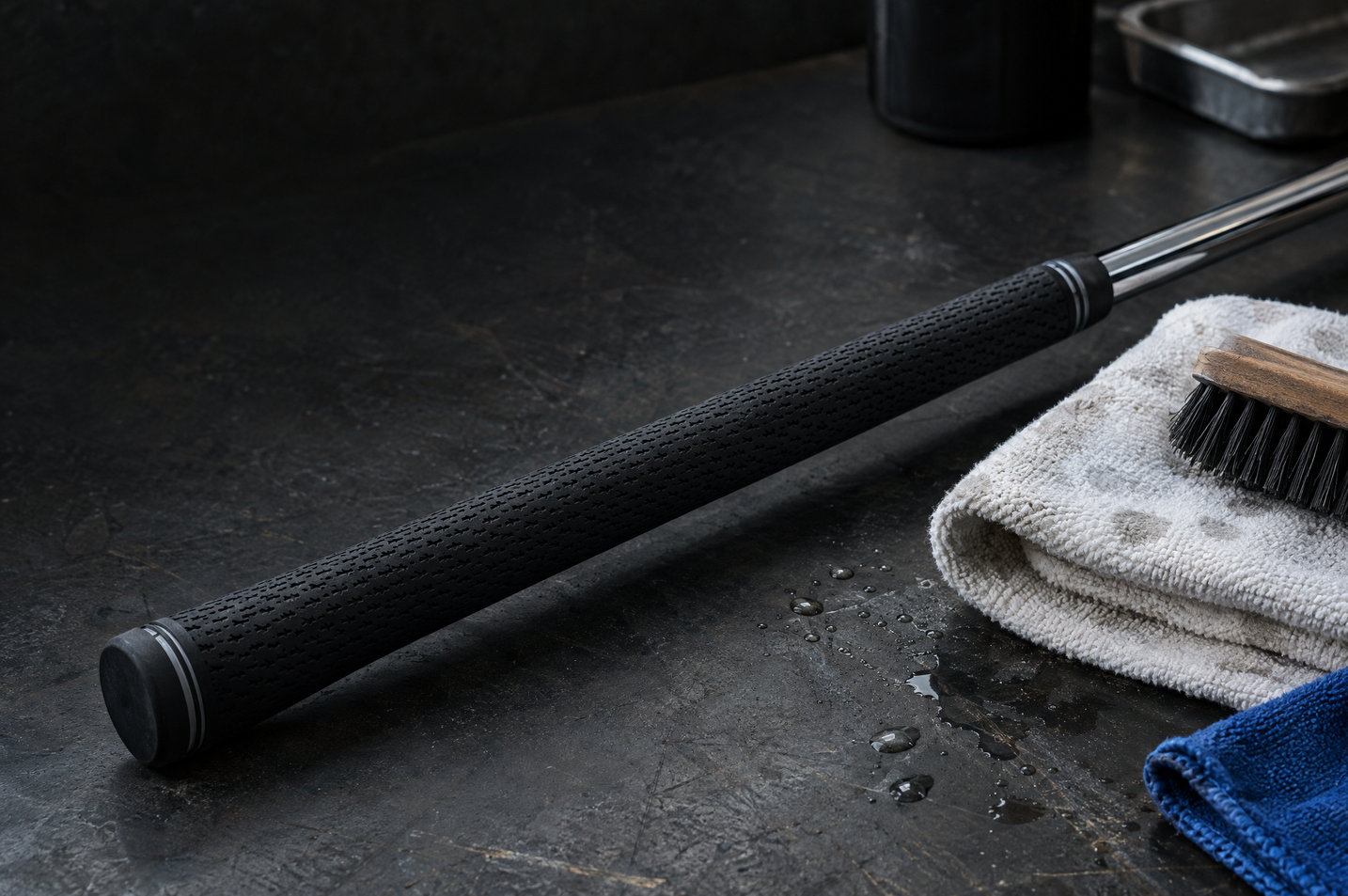
Your grips feel slippery. That doesn’t automatically mean you need a new set. It also doesn’t mean a vigorous scrub will bring them back.
Clean an intact grip using its manufacturer’s method, let it dry completely, then check the feel again. Replace grips with obvious physical wear. Before reaching for soap and a brush, identify the brand and model: the same cleaning method does not suit every grip.
A few minutes checking what you’ve actually got can save you buying grips unnecessarily—or ruining a perfectly good one with the wrong cleaning routine.
Check the grip before you clean it
Start with the club in your hand, not a bucket of water. Find the brand and model, then look closely at the places your fingers and thumbs usually sit.
Is the surface simply dirty? Or has the texture worn away? Does it look glossy and feel harder than it used to? Are there cracks, loose pieces or a damaged outer layer?
Cleaning removes surface contamination. It doesn’t rebuild worn material. If the grip is visibly damaged, put your effort into choosing its replacement.
| What you find | Your next step |
|---|---|
| An intact grip with dirt or residue | Use the maker’s cleaning method, dry it and reassess. |
| Worn texture, crumbling material or obvious damage | Plan a replacement. Scrubbing won’t repair it. |
| A clean, dry grip that still feels slippery | Check wear, hand/glove condition and fit before ordering the same model again. |
| A grip you can’t identify | Find the model or ask for help before applying cleaners. |
How to clean Golf Pride grips
Golf Pride’s care guidance recommends soap, water and a soft brush. Its official cleaning demonstration uses warm water and mild dish soap, followed by a clean-water rinse and towel drying.
- Prepare the cleaning tools. Get warm water, mild dish soap, a soft brush or cleaning cloth, and a clean towel.
- Clean around the grip. Dip the brush or cloth in the soapy water and work around the surface, including the areas beneath your thumbs.
- Remove the soap. Rinse the surface with clean water rather than leaving a soapy film behind.
- Dry it. Pat it dry with the towel, then let it dry thoroughly before using it or judging the result.
This is Golf Pride’s method. It isn’t permission to treat every soft or wrapped grip in the bag the same way.
How to clean Winn grips: put the brush down
Winn’s polymer grips need different care. Winn’s own instructions say to lightly dampen a soft towel with water and gently wipe the grip. Keep the towel damp, not saturated.
Winn specifically warns against using a brush and soapy water, or immersing its grips. Those methods can damage the surface or soak the underlying layer.
That matters if you use something like the Winn Dri-Tac 2.0. The advice your mate uses for his rubber grips may be completely wrong for yours.
What about Flat Cat putter grips?
Flat Cat recommends occasionally wiping its grips with a damp, soft cloth. It says not to saturate the grip or immerse it in water.
Check your putter when you check the rest of the bag. It can be easy to forget the grip on the club you use on every green.
For other brands, use the instructions for your exact model. A soft feel or similar-looking finish doesn’t establish that two grips are made the same way. If the guidance is unclear, ask the manufacturer before trying a stronger cleaner.
When should you replace slippery golf grips?
A useful test is how the grip feels after the correct clean and a complete dry. If the surface remains slick, inspect it closely rather than repeating the wash with more force.
Golf Pride identifies a glossy, slippery surface, increased firmness and crumbling rubber or cord as signs of wear. Worn or missing paint details can also flag that it is time for a closer look.
Work through the bag club by club. Compare the areas you hold most with less-used parts of the same grip. You’re looking for changes in condition, not comparing an old firm rubber grip with a new cushioned one and calling the difference wear.
If the grip appears sound but you still feel it slipping, check your hands and glove too. A damp or dirty contact surface can confuse the diagnosis. If you’re still unsure, have a club fitter inspect it before buying replacements.
How often should you regrip golf clubs?
Golf Pride recommends replacing its grips at least once a year, with playing and practice frequency affecting the interval. Winn says its grips may last more or less than a season depending on use.
Treat that as manufacturer guidance, not a universal expiry date stamped on every grip. Inspect the actual condition and follow the advice for your model. Don’t wait for an anniversary if the surface is already worn out.
To look after grips between replacements, Golf Pride recommends regular cleaning, clean hands during play and storage somewhere cool and dry, away from sunlight and heat. That rules out treating the boot of a hot car as permanent club storage.
If you’re replacing them, check the fit as well
Before ordering thirteen copies of the same grip, ask whether you liked it in the first place. Was it comfortable? Did the surface suit you? Was the size right?
Our standard versus midsize guide helps with the size decision. For a putter, start with the putter-grip choosing guide.
Doing the job at home? Read the installation guide and what you need in a regripping kit. If you’re weighing up DIY against a fitter, the Australian regripping-cost guide lays out the different costs.
If a correct clean restores the feel and the grip is in good condition, you may not need to buy anything. If it has worn out, choose the replacement that suits you now.
Browse replacement golf grips →
Care advice checked against the linked Golf Pride, Winn and Flat Cat manufacturer guidance on 14 October 2026. Follow any model-specific instructions supplied with your grip.