
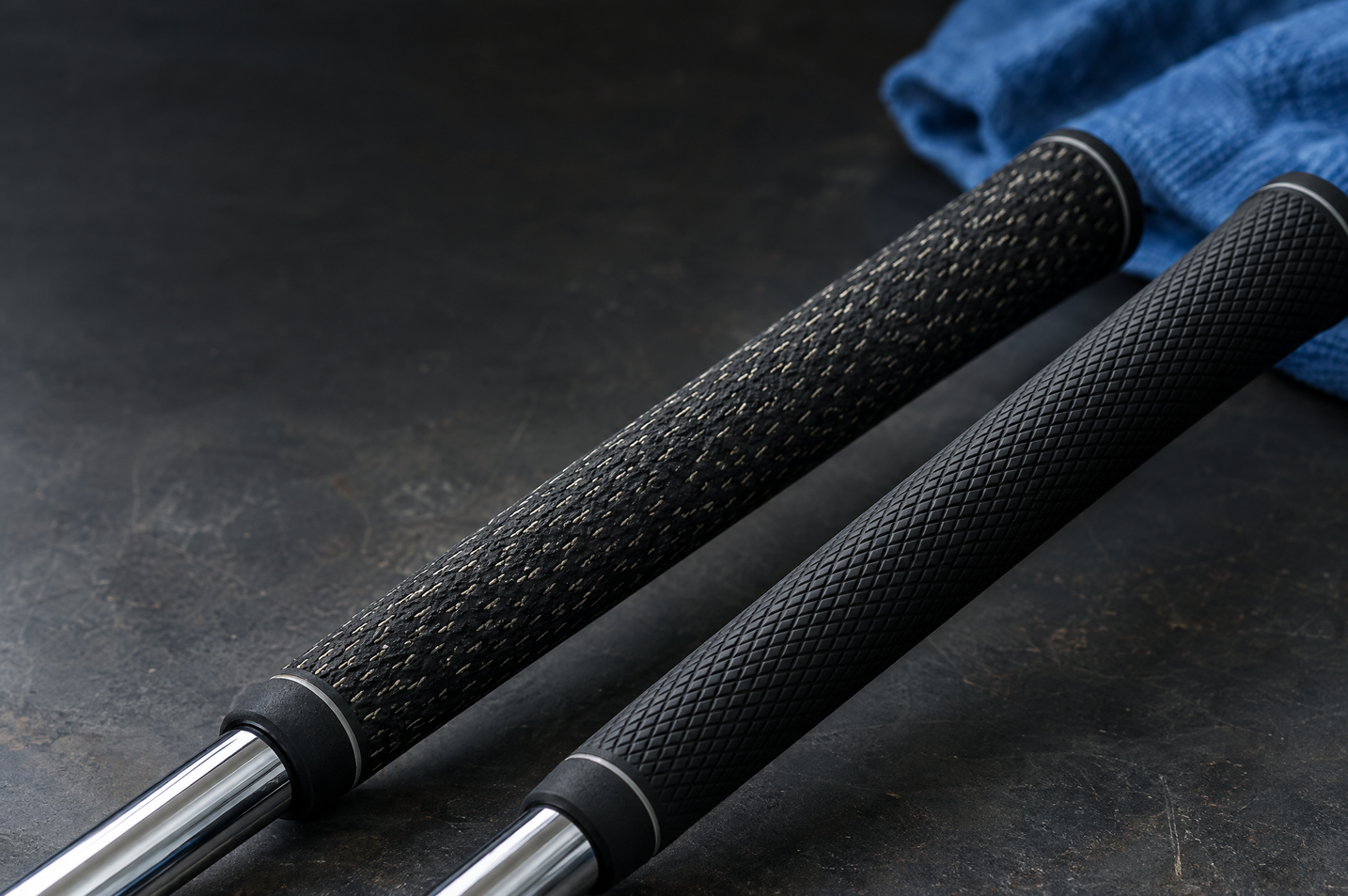
Cord grips have cotton fibres woven through the rubber to add texture and help manage moisture. Non-cord rubber grips rely on their compound and surface pattern. The choice comes down to feel and the conditions you play in.
Cord is worth trying if your hands sweat or you play in the rain. You still have to like holding it.
What does the cord do?
The exposed fibres help maintain traction when moisture gets between your hands and the grip. Golf Pride’s cord guide explains the construction and its use in wet conditions.
Full-cord grips have cord across both hand areas. Some golfers like that texture. Others find it rough on their bare hand. Try a few shots before deciding.
The Lamkin Crossline 360 Genesis Full Cord is a cord option in our range.
What about plain rubber?
A non-cord rubber grip is a sensible starting point if you prefer a surface without exposed fibres. The Lamkin Crossline uses a firm rubber compound and a patterned surface.
Don’t assume rubber means soft or smooth. Texture and firmness vary between models. Check both.
Hybrid grips split the job
Hybrid designs such as Golf Pride MCC use cord under the upper hand and rubber under the lower hand. That gives you two different surfaces on one grip. Golf Pride explains the layout here.
If you like cord under your glove but less texture against your bare hand, this is another construction to compare.
Soft grips aren’t all rubber
The Winn Dri-Tac 2.0 uses Winn’s polymer construction and has a cushioned, tacky surface. It belongs in the comparison if comfort is your priority, but it isn’t a conventional rubber grip.
Follow the care instructions for the actual model. Different materials need different treatment.
Choosing golf grips for sweaty hands
Start by checking where the slipping happens. Is your bare hand moving on the grip, is your gloved hand moving inside a wet glove, or does the grip itself turn on the shaft? Those are different problems. A change of surface is not the answer to all three.
- Bare hand slipping when damp: put cord on your shortlist, then check whether you like the texture under that hand. Full cord gives you cord in both hand areas; a hybrid leaves a different surface under the lower hand.
- Glove soaked through: check the glove’s condition and fit, and bring a dry spare. Assess the grip with a usable glove before deciding the whole set needs replacing.
- Slippery even when dry: inspect the grip for dirt and wear. Start with the correct cleaning method for its material. Cleaning can remove dirt; it cannot restore worn texture.
- Grip turning on the shaft: stop using that club and have the installation checked. That is not a cord-versus-rubber decision.
There is no single “best for sweaty hands” grip that everyone will enjoy. Use moisture handling to narrow the options, then let your hands have a vote. You still need to be comfortable holding it for a whole round.
What changes when it rains?
Give yourself a way to dry your hands and the grip between shots. Keep a dry towel protected in the bag, rather than letting your only towel collect the same rain as everything else. Keep the grips covered while you are not using the clubs.
Compare options in the conditions you actually play in. A quick squeeze in a dry shop tells you something about texture, but it cannot tell you how you will get on with that grip during a humid afternoon or a wet round.
Don’t assume that a soft or tacky feel in dry weather guarantees the result you want when damp. Surface feel, construction and condition all deserve a look. Our soft versus tacky guide separates those two descriptions.
Keep the trial simple
Try one grip on a familiar club. Keep the size and tape build-up consistent so you can judge the surface. Hit full shots and a few shorter ones where you grip down.
Check both hands. If the texture annoys you after a bucket of balls, it probably won’t improve over eighteen holes.
Once you have chosen a material, look after it properly. Our golf grip cleaning guide explains why rubber and Winn polymer grips need different care.